
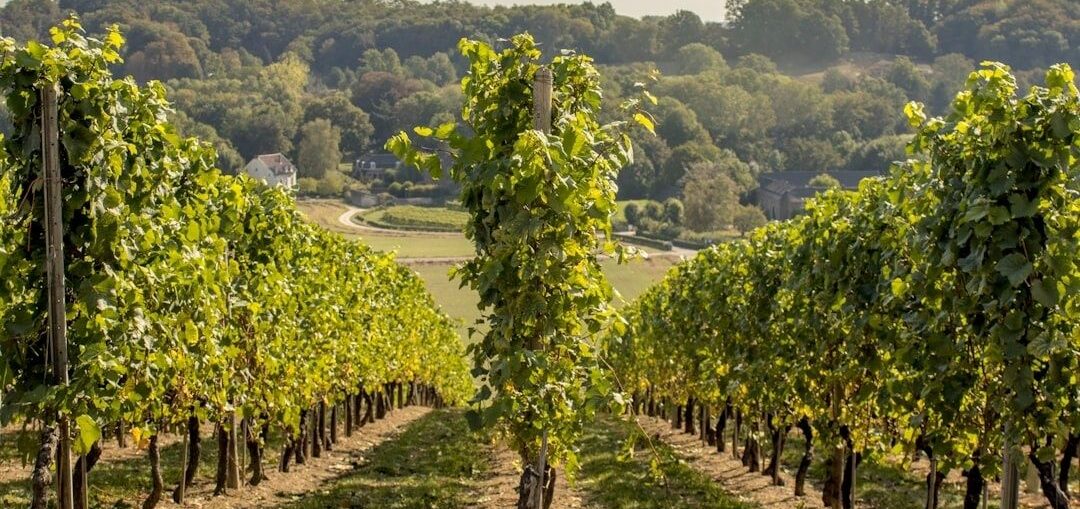
The Quiet Revolution Along England’s Chalk Ridges
Along the South Downs and North Downs, cellar doors now open onto a wine landscape that would have seemed improbable a generation ago. Between white cliffs, rolling grassland, and maritime light, producers are pouring sparkling wines with the poise of serious Champagne, yet with a distinctly English accent. For anyone planning a refined tasting, a bottle of English sparkling wine offers more than patriotic novelty. It brings precision, texture, and a sense of place to the table.
The change is not simply a matter of warmer summers or clever branding. It is the result of geological kinship, carefully chosen vineyard sites, improved viticulture, and exacting cellar work. England shares important chalk formations with northern France, but its wines are shaped by a cooler, maritime setting and by producers confident enough to let freshness lead. The result is a category now worthy of sommelier attention, whether served with oysters at a long lunch or poured as an aperitif before dinner.
The Shared Cretaceous Ribbon Connecting Sussex to Champagne
The geological story begins beneath the English Channel. Chalk formed during the Cretaceous period extends through the Paris Basin and reappears in southern England, particularly across the Downs of Sussex, Hampshire, Surrey, and Kent. This continuity is often described as a ribbon connecting Champagne with the English vineyards, although the comparison should not be taken to mean that the two regions are identical. Chalk deposits vary in age, depth, composition, and structure, and local geology remains vital.
In the most celebrated Downland sites, the soil is composed of fine chalk rich in the fossilised remains of marine organisms, including belemnites and micraster. It is free draining, which helps vines avoid waterlogging during England’s wet spells, but it can also retain moisture within its porous structure during drier periods. Its high alkalinity influences nutrient availability and supports the naturally brisk profile associated with Chardonnay and Pinot Noir grown on these slopes.
That combination often appears in the glass as linear acidity, citrus brightness, and a mineral impression reminiscent of oyster shell, wet stone, or chalk dust. The effect is not a literal flavour extracted from rock, but a combination of tension, low apparent heaviness, and a long, clean finish. By contrast, the Weald contains more greensand, clay, sandstone, and ironstone. These soils generally retain more moisture and nutrients, encouraging fuller berry development and wines with broader texture, darker fruit, and softer acidity.
- Downland chalk often favours citrus, floral detail, fine structure, and persistent freshness.
- Wealden clay and sandstone can contribute greater body, generous fruit, and an earlier approachable texture.
- Site and winemaking remain decisive, particularly when estates blend fruit from several counties.
This is why the most useful question is not whether English sparkling wine is made on chalk, but which chalk, at what elevation, with what exposure, and alongside which neighbouring soils. Debate around regional boundaries, including Sussex’s county-wide sparkling designation, reflects a young industry still learning how its most meaningful wine landscapes should be described.
Sunlight, Extended Ripening, and the Warming Clime
Traditional sparkling wine needs an unusual balance. Grapes must accumulate enough sugar and flavour for a satisfying base wine, yet retain substantial acidity so the finished cuvée remains energetic after secondary fermentation. Southern England historically sat close to the cool edge of reliable ripeness, but warmer growing seasons, better clones, improved canopy management, and carefully selected south-facing sites have changed the equation.
The advantage is not simply heat. Southern England receives long summer daylight and a gentle maritime influence, allowing grapes to ripen gradually rather than being pushed rapidly by extreme temperatures. Chardonnay can develop lemon, apple, and floral notes while keeping its spine of acidity. Pinot Noir gains red-fruit perfume and substance without losing its appetite-whetting edge. This extended, measured ripening is particularly valuable for sparkling wine, where freshness is not a flaw to be softened but the foundation of the style.
Standout warm vintages such as 2018 demonstrated how favourable conditions can produce impressive sugar-acid ratios while preserving the crispness expected from English bottles. Yet the climate remains changeable. Frost, rain during flowering, wind, and fungal pressure continue to make site selection and vineyard management essential. The industry’s growth has therefore attracted serious international investment. Taittinger has planted in Kent, Pommery has established vineyards in Hampshire, and Henkell Freixenet acquired Bolney Wine Estate. Such moves are not proof that every season will be easy, but they are a powerful endorsement of southern England’s long-term climate readiness.
A Tale of Two Terroirs
Champagne remains the benchmark, but comparison is most useful when it reveals difference rather than demanding imitation. Both regions rely heavily on Chardonnay, Pinot Noir, and Pinot Meunier, and both use the traditional method. Their shared chalk connection helps explain the familiar poise of English sparkling wine, while latitude, weather patterns, and vineyard conditions give each region its own voice.
| Feature | Southern England | Champagne |
|---|---|---|
| Soils | Chalk, greensand, clay, sandstone, and ironstone, with marked site variation | Predominantly chalk and limestone, with regional marl and clay influences |
| Latitude | Generally similar to, or slightly north of, Champagne’s principal vineyard areas | Cool northern French continental setting |
| Climate | Maritime, changeable, often humid, with long daylight and moderate summers | Cool continental climate with sharper seasonal contrasts |
| Typical profile | Citrus, green apple, orchard fruit, fine mousse, and pronounced freshness | Apple, citrus, chalk, pastry, and broader stylistic variation by house and village |
| Dosage style | Often brut or brut nature, using dosage carefully to balance high acidity | Ranges from brut nature to sweeter styles, with house traditions strongly influential |
English sparkling wine therefore deserves to be judged on its own terms. Its unapologetic freshness can make it especially compelling with food, and its often transparent fruit profile gives the wines a lifted, precise character. It is not a replica of Champagne produced on the other side of the Channel. It is a related but distinct expression of a cool-climate landscape.
Mastering the Traditional Method in the Cellar
The technical foundation is the traditional method, known in French as méthode traditionnelle. A still base wine is first made, usually with an emphasis on acidity and moderate alcohol. A second addition of yeast and sugar is then made before bottling. Fermentation takes place inside the sealed bottle, creating carbon dioxide that dissolves into the wine. The wine rests on its lees, the spent yeast cells, before the sediment is moved into the neck, frozen, and expelled during disgorgement.
Lees ageing is where technical precision becomes sensory pleasure. Over time, yeast breakdown contributes aromas and flavours of biscuit, pastry, warm brioche, toasted almond, and lemon curd, while the wine’s acidity keeps those richer notes from feeling heavy. Estates such as Gusbourne and Ridgeview have shown how English fruit can carry extended ageing with confidence. Mature examples can combine cool citrus and chalky structure with a creamy mousse and savoury depth, creating a glass that rewards lingering.
Producer philosophy also matters. Single-estate wineries such as Gusbourne emphasise control from vineyard to bottle, allowing a particular site’s fruit, exposure, and soil to remain visible. Other producers use grower-sourced or multi-region blending to achieve consistency and balance across variable seasons. Neither approach is inherently superior. A blended brut can be beautifully dependable, while a single-vineyard or vintage bottling may offer greater detail and a more pronounced sense of origin.
- Blanc de Blancs, made from white grapes such as Chardonnay, usually emphasises lemon, apple, floral notes, and a slender mineral line.
- Blanc de Noirs, made from dark-skinned varieties, can bring greater breadth, red-fruit character, and savoury structure.
- Vintage Rosé often combines English freshness with raspberry, redcurrant, and subtle spice, making it particularly effective at the table.
The confidence of these styles reflects an industry moving beyond entry-level celebration wines. English producers are increasingly comfortable with longer lees ageing, restrained dosage, oak fermentation for selected lots, and careful vintage expression. The finest bottles are not simply fresh. They are layered, gastronomic, and capable of development.
The Host’s Guide to Pouring and Pairing English Fizz
Serve English sparkling wine cool rather than aggressively cold. Around 8 to 10 degrees Celsius is a useful starting point, with richer vintage cuvées benefiting from a slight rise in temperature as they open. A tulip-shaped sparkling glass or a quality white-wine stem is preferable to a very narrow flute. The wider bowl allows citrus, orchard fruit, pastry, and mineral aromas to gather, while the tapered rim still preserves the wine’s lift and mousse.
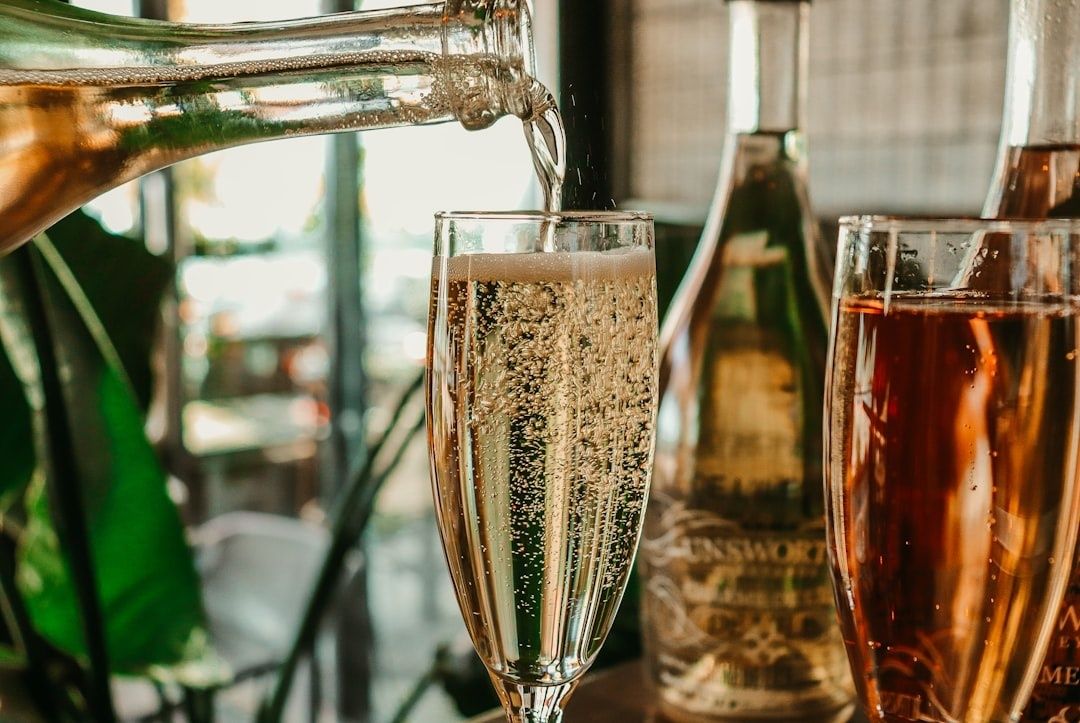
Pairing should follow the wine’s central virtue, its freshness. Native oysters are a natural match, particularly with a chalk-driven Blanc de Blancs whose saline impression echoes the sea without overwhelming the shellfish. Butter-poached turbot works with a fuller brut or mature vintage wine, as the acidity cuts through the butter while the lees-derived texture meets the fish’s delicate richness. A slice of Sussex Charmer brings nutty, savoury depth, while an earthy mushroom tart creates a satisfying contrast with rosé or a structured Blanc de Noirs.
- Begin with the aperitif. Choose a bright brut, served in a tulip glass, alongside salted almonds, gougères, or delicate smoked fish.
- Move toward the table. Pair richer cuvées with turbot, roast chicken, shellfish, or a restrained cream sauce.
- Match texture as well as flavour. Creamy lees character welcomes buttery dishes, while high-acid wines refresh salty and fried elements.
- Allow the bottle to unfold. Pour modestly, revisit the glass after ten minutes, and notice how fruit and pastry notes broaden.
Top English vintage cuvées can also reward patience. Five to ten years in a cool, dark, stable cellar may soften the mousse, deepen the fruit, and bring out hazelnut, toast, honey, and savoury complexity. Store bottles horizontally if they will rest for a significant period, avoid heat and vibration, and remember that a fine English sparkling wine need not wait for a formal occasion. Its freshness makes it equally at home with Sunday lunch, an evening of good conversation, or a quietly celebratory toast.
Stocking Your Cellar With England’s Finest Bottles
The appeal of English sparkling wine lies in the meeting of three forces: prehistoric chalk, nuanced maritime sunlight, and increasingly assured cellar craftsmanship. The chalk offers drainage and tension, the cool climate preserves acidity, and traditional-method ageing builds the creamy, savoury dimension that makes the best bottles so compelling. Add careful site selection and modern viticultural skill, and England becomes far more than an improbable place to grow Champagne varieties.
Choose a brut non-vintage as an introduction to a producer’s house style, a Blanc de Blancs for a leaner citrus-led expression, or a vintage Rosé when the meal calls for red-fruit perfume and extra texture. For a deeper exploration, visit South Downs tasting rooms, compare chalk-grown and Wealden-influenced wines, and ask about harvest year, lees ageing, dosage, and fruit sourcing. English sparkling wine is not a substitute to be apologetically placed beside Champagne. It is a prestigious category with its own accent, and increasingly, a bottle worth giving the finest place on the list.