

Uncorking the Science Behind Every Bottle
A bottle of wine carries two stories at once. There is the visible ritual, the quiet twist of a screwcap or the satisfying pull of a cork, followed by the first fragrant breath from the neck. Then there is the less romantic, more decisive story unfolding inside: oxygen enters, compounds react, colour shifts, aromas soften, and texture gathers depth. For anyone selecting a bottle for a long dinner or a carefully planned cellar, understanding that chemistry can be more useful than relying on the closure”s reputation.
Natural cork still possesses undeniable ceremony, and a well-aged bottle opened with care brings a sense of occasion that suits slow evenings and good conversation. Yet tradition is not a guarantee of performance. Bottle maturation is governed principally by the amount and consistency of oxygen passing through the closure. A screwcap can preserve brightness and aromatic detail with remarkable precision, while a sound natural cork may encourage a gradual evolution toward savoury complexity. Neither is automatically more prestigious. Each is a stylistic tool, and the right choice depends on the wine, the intended drinking window, and the kind of development you want in the glass.
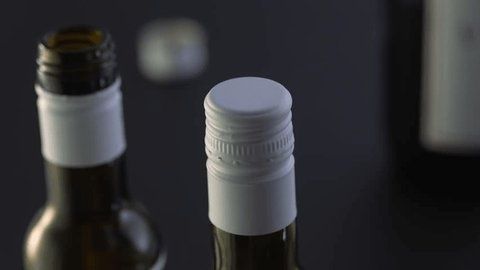
The Dynamics of Oxygen Transmission Rates
Oxygen Transmission Rate, usually abbreviated as OTR, describes how much oxygen can pass through a closure over a given period. In practical wine terms, it is a measure of controlled micro-oxygenation. Tiny amounts of oxygen can help soften certain phenolic compounds, influence pigment stability, and encourage the progression from primary fruit toward tertiary notes such as dried herbs, leather, tobacco, nuts, and earth. Too much oxygen, however, can flatten fruit, darken colour, and produce bruised-apple, cardboard, sherry-like, or varnish-like aromas.
Natural cork is a biological material formed from bark, so its permeability is never perfectly uniform. The microscopic structure contains cells, channels, and occasional imperfections. One cork may provide a remarkably slow and steady oxygen supply, while another from the same batch may seal less effectively. Research discussed by the Australian Wine Research Institute closure trial shows why this variability matters. The trial used a standardised Clare Valley Semillon and multiple closure types, then followed physical, chemical, and sensory changes over time. Retained sulfur dioxide and ascorbic acid corresponded with less browning and fresher character, making sulfur dioxide a useful indicator of how effectively a closure limited oxidation.
Manufactured closures aim to replace biological variation with engineered predictability. Synthetic polymers can be designed to provide a selected rate of oxygen ingress, although their performance differs by product and may change as the material ages. Screwcap systems rely on the liner, often a tin-saran or related multilayer construction, to regulate transmission. These liners can be remarkably tight and consistent. A useful overview of the chemistry and sensory consequences of closure choice appears in this research review on wine bottle maturation, while broader background on alternative systems is available through this guide to alternative wine closures.
- Natural cork: variable but capable of very slow oxygen transfer and long-established cellar performance.
- Technical cork: manufactured from cork granules or selected cork components, designed to reduce variation while retaining some cork character.
- Synthetic closures: polymer-based stoppers with more predictable specifications, though performance depends greatly on the particular design.
- Screwcaps: highly consistent closures whose liners can provide very low oxygen ingress and strong protection against oxidation.
A Direct Comparison of Modern Closures
It is tempting to rank closures from traditional to modern, as though the sequence also represented quality. The more useful approach is to compare what each closure does to the wine. Natural cork offers the longest historical record for extended ageing, but it also brings bottle-to-bottle variation and the possibility of trichloroanisole, commonly known as TCA. TCA can produce damp basement, mouldy, or wet-cardboard aromas, muting fruit and making a sound wine seem tired. Estimates vary, but the research context indicates that roughly 1 to 2 percent of natural corks may be associated with this problem.
| Closure | Oxygen behaviour | Strengths | Potential concerns |
|---|---|---|---|
| Natural cork | Low, but variable | Long track record and graceful development in suitable wines | TCA risk, inconsistent sealing, bottle variation |
| Technical cork | Designed for greater consistency | Reduced variation compared with natural cork | Quality and performance depend on construction |
| Synthetic polymer | Selectable, often higher than natural cork | No classic cork taint and useful consistency | Some products may allow too much oxygen or show material-related aromas |
| Screwcap with tin-saran liner | Very low and highly consistent | Freshness, predictable storage, and no TCA from cork | Very tight conditions may encourage reductive aromas |
The Australian Wine Research Institute”s closure trial remains one of the most instructive comparisons because it examined 14 closures under controlled conditions, including conventional cork, technical cork, synthetic polymers, and screwcap. Early findings showed that the best screwcap preserved sulfur dioxide and ascorbic acid and produced the slowest browning. At the same time, a rubber-like character appeared in the screwcap wine after about 18 months, possibly because the extremely anaerobic environment restricted oxidation too severely. The researchers stressed that the trial was designed to continue for a decade, so early results could not answer every question about very long-term ageing.
Reductive Pitfalls versus Premature Oxidation
Closure choice is a balancing act between two opposing problems. Premature oxidation brings a loss of freshness. Bright citrus can become bruised apple, green fruit can turn flat and straw-like, and the wine”s finish may lose its lift. The Australian Wine Research Institute identifies oxidation-related aromas including cardboard, hay, wet wool, wet dog, and sherry-like notes. In red wine, oxygen can also accelerate colour changes and diminish the sense of vivid fruit that gives a young vintage its energy.
At the other extreme, an ultra-tight seal can create a reductive environment. Reduction describes a family of conditions in which sulfur-containing compounds may become perceptible as struck match, rubber, cabbage, or rotten egg. Hydrogen sulfide, for example, is associated with a rotten-egg smell and can arise during stressed fermentation, but limited oxygen availability and the wine”s broader chemical balance can influence how sulfur compounds develop and persist. These aromas are not always permanent faults. Some may dissipate with swirling or decanting, while others signal a more serious problem.
Modern winemaking therefore treats the closure as part of the entire production plan. A winemaker may adjust free sulfur dioxide additions, manage oxygen during bottling, select a liner with a particular transmission profile, or allow more controlled oxygen exposure before sealing. The aim is not to maximise or eliminate oxygen, but to give the wine enough breathing room for its intended style. Historical discussion of this shift appears in broader coverage of alternative wine closures, while detailed fault descriptions are available from the Australian Wine Research Institute.
- For freshness: low oxygen ingress protects delicate aromas, acidity, and pale colour.
- For evolution: measured oxygen exposure can support textural softening and tertiary development.
- For reduction control: sulfur management, healthy fermentation, and suitable bottling oxygen are as important as the closure itself.
- For service: a reduced wine may improve after pouring into a broad glass or decanter, but decanting cannot reverse advanced oxidation.
Cellaring Guidelines for the Thoughtful Collector
Screwcaps are especially persuasive for wines whose pleasure lies in fragrance, tension, and clean fruit. Riesling, Sauvignon Blanc, Grüner Veltliner, Albariño, unoaked Chardonnay, and many crisp rosés can benefit from the protection of a tight seal. They may retain citrus, flowers, green herbs, and mineral impressions with striking clarity. This does not mean that screwcap wines cannot age. Rather, they often age along a different curve, preserving primary character for longer and sometimes developing more slowly or with a more linear profile.
Natural and high-quality technical corks remain sensible choices for serious red wines intended for extended cellaring, particularly when the producer has a reliable record and the bottle is stored correctly. Cabernet Sauvignon, Nebbiolo, traditional Rioja, mature Bordeaux-style blends, and structured Syrah may gain harmony as tannin, acidity, fruit, and savoury notes knit together. Yet the closure should never be used as the sole reason to lay a bottle down. Vintage, producer, balance, sulfur management, fill level, and storage temperature matter just as much.
- Store bottles at a stable, cool temperature away from sunlight, vibration, and repeated fluctuations.
- Record the closure alongside vintage, producer, and purchase date, since it can help explain differences between bottles.
- When opening an aged screwcap wine, pour a small taste first and assess whether the nose is muted, struck, rubbery, or simply youthful.
- If the wine appears reduced but structurally sound, swirl vigorously or decant briefly, then retaste after 10 to 20 minutes.
- Serve older wines in clean, suitable glasses and avoid assuming that every bottle needs prolonged aeration.
Curating Your Cellar with Confidence and Palate Precision
The closure is not a medal attached to the bottle. It is an architectural decision, one that governs the pace and character of the wine”s journey. A screwcap may be the elegant choice for a white wine where precision, perfume, and coastal freshness matter. A well-made natural cork may be perfect for a red whose appeal lies in gradual integration, softened tannin, and the savoury glow of maturity. Technical corks and advanced synthetics deserve the same measured attention, particularly as their consistency continues to improve.
The most revealing exercise is a side-by-side tasting of the same wine under different closures. Pour both versions at the same temperature, use identical glasses, and taste first without knowing which is which. Look for fruit definition, texture, acidity, colour, savoury development, and any rubbery, mouldy, or oxidised notes. Such comparisons replace received wisdom with direct experience. The best cellar is not built around romance or technology alone, but around bottles chosen with clear intent, stored patiently, and served when their chemistry has made them worth lingering over.